The Dangers of Dihydrogen Monoxide: Prevent a Tragedy With Science
I use this article in my classrooms every spring. I hope you will all find it useful as well. Information is life-saving, and this particular information contains more than one lesson for us all. I would be most grateful, and extremely interested in any comments you will make.
=========================================
Dihydrogen Monoxide: When people do not have sufficient knowledge of science, terrible things can happen!
IX: Deadly science in the home: be sure you know what to look for!
 Every year, thousands of people die from exposure to dihydrogen monoxide. Widely unreported by the media and virtually ignored by government agencies, this silent toxin remains unknown to the majority of people at risk.
Some officials believe that dihydrogen monoxide’s deadly facts and statistics will never be fully released to the public because of government dependence on its addictive qualities; in other words, the “feel good” sensations it can deliver are blinding people to the harm it can also cause, and it’s been proven that most federal, state, and local governments are made up of people who simply can’t do without it.
The presence of dihydrogen monoxide has been found in schools, businesses, and even homes, and traces of it exist in many toxic chemicals such as sulfuric acid and ethyl alcohol. Many estimates show that every home in America – if not every home in the world – contains a DHMO source, intensifying the danger of this potentially deadly and hazardous compound.
In addition to the dangers posed to living creatures, DHMO has caused billions of dollars worth of property and environmental damage. The chemical compound in DHMO has been known to wipe out entire cities at record-breaking speed.
Perhaps the most surprising aspect of dihydrogen monoxide is its wide-spread use in almost every aspect of daily life. Research has proven that this chemical compound is used for everything from sanitizer to pesticides. In recent years, dihydrogen monoxide has been used as a performance-enhancing supplement; in other words, athletes and potential athletes are using DHMO as an energy booster before a race or game, etc. (the fairness and sportsmanship of this practice is being questioned, but the use of DHMO by athletes is rising yearly.) Younger children, seeing the older athletes using DHMO freely, are imitating them in rising numbers.
A surprising number of young parents have been seen – in public – giving children as young as 2 weeks a dose of dihydrogen monoxide in order to quiet or silence them. One can only imagine how much DHMO these innocent babies are getting at home.
Dihydrogen monoxide is a popular, much-sought-after substance in the public schools. Even elementary children have begged for it, right in the middle of the school day, so addicted that they’ve become unashamed in their desperate longing for a “hit.” Little wonder, too, as we see so many adults carrying a stash of DHMO into stores and other public and private places, unable to do without a “hit” themselves.
When frozen, DHMO expands to the level that can cause severe damage to people’s homes, often in the night when people are sleeping. IN fact, DHMO can expand with such violent force that it is not possible to make a usable pipe strong enough to withstand this force. Variations of DHMO have also been found in homemade bombs, which would use the pressure and explosive power of this compound to destroy.
The American Burn Association has identified DHMO as a target for a public awareness campaign regarding the dangers of the compound, as even a simple action such as heating it in a microwave can cause it to explode unexpectedly and violently, causing first and second degree burns on anyone in its path.
Dihydrogen monoxide can also cause exponential growth of mold and bacteria. Under the right conditions, DHMO will encourage molds to grow rampantly, quickly covering surfaces and rising to toxic levels.
Even when people are well-trained in the use of dihydrogen monoxide, accidents will inevitably happen and are more often than not fatal. People’s failure to train their children in the proper use of DHMO will almost always result in shock/trauma at the very least, and brain damage and even death at the very worst.
Dihydrogen Monoxide is a clear and odorless liquid and is often difficult to detect; experts must be called in when a severe build-up is discovered. It is difficult if not impossible to totally isolate our society from dihydrogen monoxide, so our survival will depend on our skill in identifying it and using it properly.
Parents, especially, are urged to secure their homes against dihydrogen monoxide misuse, as the lives and well-being of their children, as well as themselves, depend on it.
Be cautious. Be careful. Most of all, BE AWARE.
Dongles, Sherlock Holmes, and Stuff That’s None of My Business
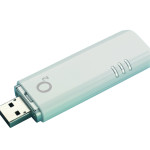 Mamacita says: I’ve been reading about the “dongle incident” and doing some serious thinking. I’ve also been doing some serious head-shaking, and some equally serious wondering about where the line should be drawn between private conversation and public listening.
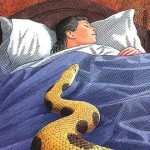 they were, knew that bending the rod in the first place required strength, and that bending it BACK required even more. Holmes’ powers of observation fascinated the kids. Weird noises in the night. Strange coincidences that even an 11-year-old thought off-kilter. A bell-pull that pulled no bell. Shared inheritances. Screams in the night. What’s not to love?
. . . on a tripod, yet. . . .Beat That, Barbie!
 Mamacita says: At Christmas, or for birthdays (the only times kids got new toys!) other little kids wanted Barbie dolls, sleds, electronics, fake makeup, shoes, sports equipment, and other “typical” kid-desired stuff. I wanted a telescope.
That’s really all I wanted. A telescope, a real, not-a-toy telescope. I’ve never like Barbie; I still don’t. I rejoiced when my daughter wasn’t a Barbie person, either. I didn’t want any kind of doll; I just wanted a telescope.
That year, after Mom and Dad came near to pleadin’ with me to name something they could understand and easily purchase, they said they’d try. I mean, that Santa would try. (Kids who know what side their bread’s buttered on believe in Santa more and far longer than cynical little kids who are too big for their britches and don’t have the negotiation skills smart little kids have). I crossed my fingers AND my toes and hoped.
Hope really is the thing with feathers. . . . My hope made my dream of Christmas morning, with me running in with my brother and sisters and seeing a telescope, a real telescope, not a toy, a telescope on a tripod, with my name on it, seem possible. And yet, I knew they didn’t really understand, and that a purchase like this would be difficult for them. I didn’t want what the other kids wanted, and no substitution would do. A substitution would devastate me, even while I was prepared for something else and a lecture about my own good.
I was obsessed with the night sky. I used to go outside at night, where the car was sitting on the carport driveway, lie on top of it, and search the night sky with a pair of pink plastic binoculars, dreaming of how much more I’d be able to see on Christmas night with my new, genuine, not-a-toy telescope on a tripod. Like astronomers had. I wonder now what the neighbors must have thought at the sight of a little girl lying on top of an old 1959 Chevrolet (the year the fins were huge) as still as a stone for hours.
You don’t need a powerful telescope to see some awesome sights in the night sky, but with a telescope, a real telescope, it was going to be so much. . . oh, I didn’t even really KNOW. . . something. MORE something. IF I got the telescope. IF Santa understood. Santa was more than a bit provincial at our house. Santa understand Barbies, but I had my doubts about a telescope.
A few days before Christmas, a wrapped package appeared under our tree. A wrapped package shaped exactly like a small telescope: a small, hand-held telescope. Toy size. I refused to so much as touch it, although my dad kept urging me to pick it up and try to guess what it might be. I didn’t want it to be the telescope. I didn’t want a toy telescope. I wanted a real telescope. On a tripod. And I was afraid now of Christmas morning.
On Christmas morning, I was afraid to run into the room. Dad filmed every Christmas morning with his 8mm camera, and I didn’t want to be preserved forever with a look of devastation on my face as I realized that Santa’s idea of a telescope was a toy purchased at Woolworth’s. I wanted no memories of a Christmas morning that didn’t have a real telescope-on-a-tripod waiting for me.
On Christmas morning, when Dad said “Go!” I walked into the living room very slowly, behind the other kids. I was scared bordering on frantic sticking a toe into the territory of terrified at what I would find.
What I found was a telescope. A real telescope, on a tripod, and it was for me. Mine. I probably got some other gifts as well, but I have no recollection of them. All I’d really wanted was the telescope and I got it.
As a matter of fact, I still have it. It’s still awesome. It was one of the first things I packed when I got married and moved away from my parents’ house, and it resides in a corner of the living room, behind the TV as I type.
Sometimes, parents who honestly don’t have a clue how to indulge a little girl’s wishes because the little girl is a genetic sport and isn’t like any of the other kids, get it right. As for the fake telescope under the tree, put there to worry and fool me, I still think that was one of the dirtiest tricks anyone ever played on me, and I refused to even touch it. Dad opened it to reveal a wrapping paper tube, and nobody understood my disdain for the whole laughing childish lot of them. 🙂
 I didn’t have to lie on top of the car any more. Now I could sit on the front steps, comfortable until the cold stone came through my pants, and look at the night sky and all its glory the way kids in books saw it. I always identified and warmed to kids in books far more than kids in real life. Kids in real life played with Barbies. Kids in real life got laughed at in school for drawing picture after picture of planets, stars, comets, asteroids, Lightning Lad, Saturn Girl, Cosmic Boy (before the Legion was rendered forever uncool by new artists and bad writers). . . . Kids in books not only looked through telescopes; sometimes, kids in books got in space ships and WENT UP THERE.
Which is a possibility I still haven’t ruled out.