Classroom Tips for the Hovering and the Worried
Dear Parents, In this day and age of instant computer access to your child’s progress in the classroom, complete with specifics as to percentage and behavior, please don’t call your child’s teacher daily and ask for an average, at least, not very often. Chances are pretty 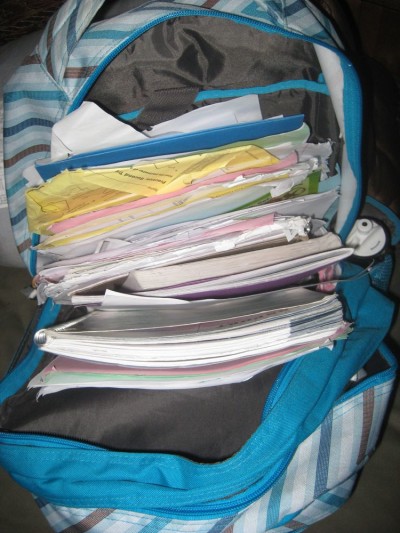 good that if you can’t find any graded papers in your kid’s backpack or notebook, he’s not doing very well. Please don’t expect that your kid will be allowed to make up all that missing or poor work. Sometimes that’s appropriate, and sometimes it is not.
A reasonably good student at almost any level knows how he’s doing in any class at any given point in time. If they show up and take their quizzes and tests and turn in their homework, they’re probably doing well. If they don’t, they aren’t. It ain’t rocket science.
Your child’s teacher has an entire classroom of students, no one child (including yours) more important than any of the others, and if each parent asked the teacher to send home a daily report, the poor teacher might as well put up a cot and start paying rent because there isn’t going to be much of a home life. And yes, parents ask us to do that all the time. At the secondary level, one teacher might have well over 200 students.
At midterm, most schools send out half-way-point standings. Check your child’s grades. If  he’s doing poorly, call the school and make an appointment with the teacher. NEVER just walk in off the street and ask the teacher to give up her lunch or prep without prior notice. (Would you walk into your dentist’s office, or your doctor, or your lawyer, or your accountant’s offices without an appointment? Have some respect.
Please don’t march in like a Teutonic Reichmaiden and assume that the teacher is a psychotic who hates all children and yours in particular, and that your child is innocent, totally innocent, and his straight-A work has been shredded by the teacher so the world will never see it. I hate to burst your bubble, but it’s probably more your child’s fault than anyone else’s. Probably.
Every single night, require your child to SHOW YOU the contents of his backpack. If the papers are wadded up, give your child some incentive to not ever do that again. Require your child to file papers immediately in a pocket folder because you’re going to be looking them over every night. If this interferes with television for either of you, cry me a river.
Do not even turn on that television until this has been done. If there is homework, make sure your child has it finished before the television is touched. Ditto computer, telephone,  and any other electronic gadgetry your child has been playing with instead of doing his academics. Don’t, however, deny your children who ARE doing it right just because one of them isn’t. Sometimes, the sound of a sibling enjoying TV or a computer game or a friend can light a fire under a slacker kid. If it makes him vicious, you’ve got problems that aren’t school-related. Call a shrink.
If your kid is an athlete and brings home a bad mid-term report, ask the coach to bench him. Usually, schools do that anyway; sports are games, and games are only for kids who have done the actual SCHOOL part of their kid-duties. A good coach will do that anyway.
Is your kid one of those students for whom sports are all he has going for him? Is playing ball his life’s priority? Help him change those priorities, because his are all wrong. Don’t EVER argue with a coach for benching your kid for low grades. Even the kid knows he deserves it.
I really don’t have to deal with these issues much any more, because at the college level, I don’t have many parents demanding that I change Junior’s grade, etc. I do have a few, though. It’s incredible and really quite sad that so many parents seem to be living their own lives over again vicariously, through their children.
I’m not a mean teacher. I am, however, a teacher (and a parent) who required all of my students to work, to obey my reasonable requests, and to behave. I still can’t think of a single viable excuse for slacking off on any of those three things. Once those three things were mastered, the creativity could flow. Once students learned that I would not put up with anyone who did not understand the big three, we could have fun. It did not take most of them very long to learn that it was better for all to behave in Mrs. G’s classroom, because for those who did, the rewards were many and awesome, and for those who didn’t, well, okay. . . .I poisoned them and buried them on the playground, under the wood chips. Nobody missed them.
That might be an exaggeration, but will you hate me if I tell you that I thought about it on occasion? Oh, so do you. Don’t lie to me.
Where was I? Oh yes.
I also say things like, “Shame on you!”
Because, you see, I really do believe that people are encouraged from a very early age to believe that they have a perfect right to please themselves in all ways, whenever and wherever they are, that nothing they choose to say or do or wear is in any way wrong or inappropriate, and that their parents are the main ones who encourage it.
Perhaps if we help our children learn that some actions and words ARE shameful, our children will treat each other better, and everyone’s self-esteem (you really don’t want to get me started on that topic) will rise naturally, instead of being inflated with bullshit so it rises regardless of what the child says and does.
Also, I use a red pen. Filled with the blood of helpless, hapless children.
 Red is the color of “Stop.” Red is the color of “Take care.” Red is the color of “Hey, might I bring your attention to this particular thing?”
Red means “Look at this. Look closely.”
Purple is the color of cutesy makes no never-mind.
Bring it on.
Nightmare #3, by Stephen Vincent Benet
 Mamacita says: Nightmare #3: When I did my student teaching, this poem was in the seventh grade literature book. I’d never seen it before, and it made a definite impression on me. I absolutely loved it, and I still love it. Why? I have no idea. I just do.
My obsessions with sci-fi, fantasy, Harry Potter, Lord of the Rings, Dr. Who, and all the trappings of geekdom and nerdery have nothing to do with it, I’m sure.
=====
Nightmare #3, by Stephen Vincent Benet
We had expected everything but revolt
And I kind of wonder myself when they started thinking–
But there’s no dice in that now.
I’ve heard fellow say
They must have planned it for years and maybe they did.
Looking back, you can find little incidents here and there,
Like the concrete-mixer in Jersey eating the wop
Or the roto press that printed ‘Fiddle-dee-dee!’
In a three-color process all over Senator Sloop,
Just as he was making a speech. The thing about that
Was, how could it walk upstairs? But it was upstairs,
Clicking and mumbling in the Senate Chamber.
They had to knock out the wall to take it away
And the wrecking-crew said it grinned.
It was only the best
Machines, of course, the superhuman machines,
The ones we’d built to be better than flesh and bone,
But the cars were in it, of course . . .
and they hunted us
Like rabbits through the cramped streets on that Bloody Monday,
The Madison Avenue busses leading the charge.
The busses were pretty bad–but I’ll not forget
The smash of glass when the Duesenberg left the show-room
And pinned three brokers to the Racquet Club steps
Or the long howl of the horns when they saw men run,
When they saw them looking for holes in the solid ground . . .
I guess they were tired of being ridden in
And stopped and started by pygmies for silly ends,
Of wrapping cheap cigarettes and bad chocolate bars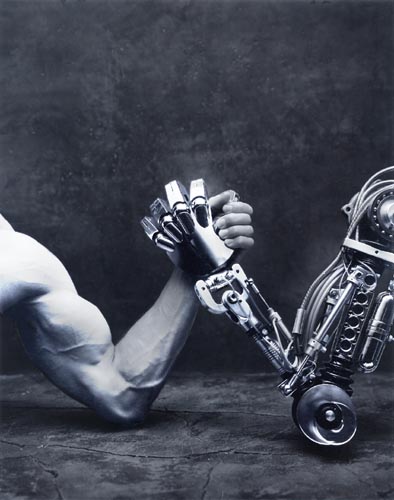
Collecting nickels and waving platinum hair
And letting six million people live in a town.
I guess it was tha, I guess they got tired of us
And the whole smell of human hands.
But it was a shock
To climb sixteen flights of stairs to Art Zuckow’s office
(Noboby took the elevators twice)
And find him strangled to death in a nest of telephones,
The octopus-tendrils waving over his head,
And a sort of quiet humming filling the air. . . .
Do they eat? . . . There was red . . . But I did not stop to look.
I don’t know yet how I got to the roof in time
And it’s lonely, here on the roof.
For a while, I thought
That window-cleaner would make it, and keep me company.
But they got him with his own hoist at the sixteenth floor
And dragged him in, with a squeal.
You see, they coöperate. Well, we taught them that
And it’s fair enough, I suppose. You see, we built them.
We taught them to think for themselves.
It was bound to come. You can see it was bound to come.
And it won’t be so bad, in the country. I hate to think
Of the reapers, running wild in the Kansas fields,
And the transport planes like hawks on a chickenyard,
But the horses might help. We might make a deal with the horses.
At least, you’ve more chance, out there.
And they need us, too.
They’re bound to realize that when they once calm down.
They’ll need oil and spare parts and adjustments and tuning up.
Slaves? Well, in a way, you know, we were slaves before.
There won’t be so much real difference–honest, there won’t.
(I wish I hadn’t looked into the beauty-parlor
And seen what was happening there.
But those are female machines and a bit high-strung.)
Oh, we’ll settle down. We’ll arrange it. We’ll compromise.
It won’t make sense to wipe out the whole human race.
Why, I bet if I went to my old Plymouth now
(Of course you’d have to do it the tactful way)
And said, ‘Look here! Who got you the swell French horn?’
He wouldn’t turn me over to those police cars;
At least I don’t think he would.
Oh, it’s going to be jake.
There won’t be so much real difference–honest, there won’t–
And I’d go down in a minute and take my chance–
I’m a good American and I always liked them–
Except for one small detail that bothers me
And that’s the food proposition. Because, you see,
The concrete-mixer may have made a mistake,
And it looks like just high spirits.
But, if it’s got so they like the flavor . . . well . . .
The Time of the Season *
 Mamacita says: Remember those scenes in You’ve Got Mail where Meg Ryan is talking about how, even at her age, she still loves the time of the season when the leaves are colorful, the weather is divine, and every store has school supplies. And then she’s swept off her feet when Tom Hanks, who doesn’t know Meg loves school supplies, says this:

As adults, we take seasonal indicators/decorations for granted. We like to mark the season with a centerpiece or bouquet or display, but the days when we were struck voiceless by the miraculous representation of a season, in public, and that’s a shame. We expect store windows and school bulletin boards and office tables to remind us of what season it is, and unless it’s our job, we don’t do a lot of thinking about how that tiny trimmed tree or vase of mums or patriotic display or heart-shaped window cling or carved jack-o-lantern got there.
To a small child, these things are part of the miracle of the universe.
In A Tree Grows in Brooklyn, Francie Nolan knew that summer was over and autumn had officially arrived when she saw the vase of autumn leaves and bittersweet on the librarian’s desk. Francie would look at the display and her heart  would ache with happiness and sadness and nostalgia and glowing joy and all the other emotions we don’t usually think small children could possibly feel. Francie didn’t have any labels for her feelings and thoughts; she just looked at the display that represented the shifting of the seasons and loved it. And it told her that the seasons had changed.
Years later, when Francie was grown up, she returned to that library and that same librarian and mentioned the vases of seasonal flora, and was devastated to learn that the librarian hadn’t even noticed them and thought the janitor must have done that.
As adults, we simply must start paying attention, the way we did when we were children.
To what? To everything. We must pay attention. If we don’t pay attention, things happen and change and we miss it.
Leo Buscaglia’s papa knew. Every night at dinner, the same thing would happen.
Papa, at the head of the table, would push his chair back slightly, a gesture that
signified the end of the eating and suggested that there would be a new activity. He 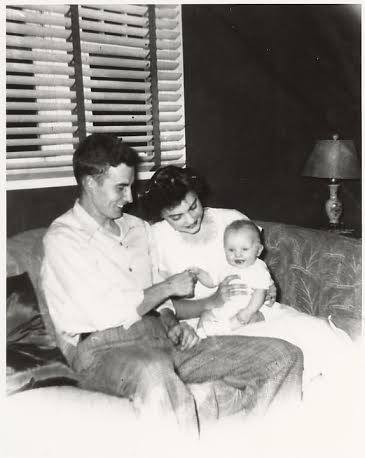 would pour a small glass of red wine, light up a thin, potent Italian cigar, inhale deeply, exhale, then take stock of his family.
For some reason this always had a slightly unsettling effect on us as we stared
back at Papa, waiting for him to say something. Every so often he would explain why he did this. He told us that if he didn’t take time to look at us, we would soon be grown and he would have missed us.
Peter Banning’s wife Moira knew, too. She tried to explain to her husband:
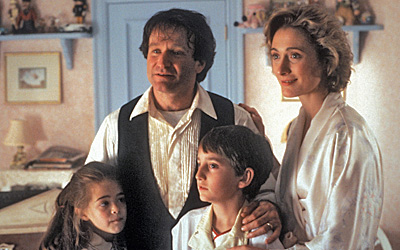 Your children love you, they want to play with you. How long do you think that lasts? Soon Jack might not even want you to come to his games. We have a few special years with our children, when they’re the ones that want us around. After that you’re going to be running after them for a bit of attention. It’s so fast, Peter. Just a few years, and it’s over. And you are not being careful. And you are missing it.
He may have been a grown-up Peter Pan, but he needed a drastic reminder. Remember, just a few hours before, he had yelled “Stop acting like a child!” at his son, who replied, “I AM a child!”
As parents, we have the power to make ordinary days extraordinary. Let’s use that power. It’s a magic so strong that, done right, it will help create children who are full of light, full enough that they’re better able to drive out the darkness than are the poor children being brought up in families who don’t know the difference between one day and the next, let alone one season and the one following.
Use your super powers for good, parents. Cultivate the noticing. Cultivate it in yourselves AND in your children. It’s the time of the season every day.