
Tinker Bell, Peter Pan, and the Cocky Asses

Mamacita says: When I was in the third grade, I read “Peter Pan.” It’s not all the sugar-coated cuteness Disney would have you believe, my friends. It’s a wonderful and fascinating and intimate look into the brain and psyche of children of various ages AND their parents. It’s accurate and hilarious and downright scary. It’s a psychological novel about dreams, and the brain. It’s not really a book for children.
It’s full of analogies and symbols and beautiful mind-art that permits us to share the fantasies of other people.
It’s a peek into how different good and evil are from one another, and how distressingly alike they can sometimes be, and how one will often present itself as the other.
It’s about children hovering on the “firly brinkmire” of adulthood and feeling their hormones even without understanding what was happening. Well, Tink and the mermaids knew, but Wendy didn’t. Neither did Peter Pan. Yet.
Captain Hook stresses good form and lovely manners and the fine points of etiquette even while murdering children. Yes, he did. Captain Hook and Smee and all the rest of the pirates hunted down children and murdered them.
Wendy had so looked forward to meeting mermaids, but although the mermaids are  beautiful and their singing is lovely, they are mean, vicious bitches who try to kill Wendy.
The Indians are presented in what would, nowadays, be considered a disgracefully stereotypical way, but Tiger Lily was cool, and unlike many supposedly intelligent adults in these modern times, children still have a sense of the context of the times and can see through it to what it was meant to be.
The thing is, all the Neverland females were hot for Peter Pan, and they recognized, in Wendy, a real rival.
 I do not pretend to be a master of Pan interpretation, but I know what I see when I see it myself. I would never presume, unlike many book censors, to say ANYTHING about a book that I had not personally read. (Censors are Satan.)
I bring all of this up to introduce my most vivid memory of this book, in third grade, in Mrs. Teacher’s class. I had to sit by Tommy, who teased unmercifully and who was only inspired further by the usual shrugs and exasperated sighs that I knew how to defend myself with.
Then, inspiration hit me. Tinker Bell, who is a dirty uneducated uncultured servant-fairy, the bottom of the social heap, sooty and ignorant and really quite cruel, had a saying she used whenever she was angry with Peter Pan. She uses it first when Peter is trying to fasten his shadow back on with soap. I loved the sentiment even while I felt guilty agreeing with Tinker Bell because Peter was, unfortunately, pretty stupid, but she was just so AWFUL. I felt sure I could use this statement on Tommy with success, so I tried it out.
“You silly ass.”
He ratted on me to the teacher, and she reamed me out but good, in her gentle concerned way, reducing me to tears with but a few words.
I had no idea what I’d done. I had NO IDEA what I’d said that was so horrible that my teacher whom I loved and adored took me out in the hall and told me how disappointed she was in me and that my parents would have to be notified and that she would have to think about my punishment, as no child had ever done what I had done in her room before.
But what was it that I had done? Was quoting Tinker Bell a crime? And if so, why?
My parents did not curse or call names in our home (at that time….) and I had seen the word ‘ass’ only in its context as an animal, one of many at the manger when Our Lord was born. Was there something bad about the ass, too? Should it not have been there with the ox and the lamb? Was it a bad animal, and was that why Tinker Bell used its name when she was angry? Was that why committees of outraged parents threw out the ass and, in its place, introduced the lamb? “The ox and ass lamb kept time, pa rum pa pum pum. . . .”
Mrs. Teacher would not explain. She just kept saying that I knew perfectly well what I had done and since I had chosen to do it, I would have to pay for it.
 Whatever she did to me later couldn’t possibly be worse than what she was doing to me right then. I didn’t know what I’d done. I had quoted Tinker Bell. From “Peter Pan.” When Tinker Bell said it in the book, nothing terrible happened. It was her opinion at that moment of whoever was annoying or upsetting her. It seemed to work in the book.
It sure didn’t work in third grade, though.
Of course, I knew, even at the time, that because Tinker Bell was low-class, dirty, unschooled, mean, hateful, selfish, and that even the other fairies looked down on her for her crudeness, some of what she did and said wasn’t quite what nice fairies or little girls would have done or said, but I still thought that if it were in a book it couldn’t be wrong.
Tommy, you silly ass, why did you have to bother me so that I felt it was necessary to use Tinker Bell against you? If you had just behaved yourself, as I was trying to do, it never would have happened.
But the real silly ass here is Mrs. Teacher. For one thing, she was an elementary teacher, a teacher of small children, a college graduate, but she did not recognize the quote even though it was from a famous novel and had been made into a children’s movie, and for another, she did not believe a good little girl who tried to explain to her the quotation’s source and why it had been used.
All she heard was that a student in HER ROOM had used the word “ass.”
When I went home that day, in tears and in a cold dread of what my non-bad-word-using parents would say, I got a surprise.
Dad laughed until he was almost sick, and Mom, while she didn’t laugh and I suspect didn’t quite understand why Dad was laughing, she at least took my side. Together, they explained that even teachers didn’t always read things they really should keep up on if they were going to teach children who read them, and that some children, like annoying Tommy, didn’t know any other way to get someone’s attention except by pestering them.
I decided on that day that people who pestered for attention weren’t worth bothering with, and that if I were ever a teacher, I would stay up nights if that’s what it took to keep up with what my students were reading.
Two of the few resolutions I have managed to keep. That’s right – I read “Twilight.”
Surprisingly, Mrs. Teacher remains one of my favorite teachers. I think maybe that learning to ‘see through her’ so early in the year gave me the ability to understand her a little better. (She was well-meaning but clueless, and it’s really not right when a child can figure that out) Certainly it gave me the courage to stand up for myself. It’s sad, though, when an eight-year-old child feels maternal and protective toward an adult who is supposed to be in charge. All that year (well, until she got pregnant and was forced to quit because if we kids had seen her looking pregnant we would have known for sure that she’d had sex, not that I would have known what that meant either never having even heard of that word yet) I stayed after school and helped her clean the board, clap erasers (I bet some of you don’t know what that means!) and put her files in alphabetical order because (gasp) some of the dimwits in that class didn’t even know how to do that and it was supposed to be done at the end of each day and most of the kids would rather just leave their stuff in a mess for the teacher to put to rights so I just did it for her.
She also used to give me a dollar and send me across the VERY BUSY STREET to the gas station for a carton of Big Red pop twice a week. I loved doing that, especially; my parents never let me go inside when they stopped there for gas because it was ‘rough.’ I didn’t know what they meant by that, but I did know that most of those men in there had read “Peter Pan” because they talked about my teacher’s ass all the time.
If all you know about ‘Peter Pan’ is that insipid Disney movie, please check out the book. It’s NOT just for children. It’s awesome.
Watch out for the bad language, though. That horny slut Tinker Bell will do or say anything to get Peter Pan in her clutches. This includes murdering Wendy. There are also drugs. And a Tinker-Bell-dying scene. Cripes, now I have to re-read this book. NOW.

Clap, children! Clap, or Tinker Bell will die!
Sadly, it also forced me to learn a very important lesson: a college degree doesn’t make someone a teacher.
Thank goodness I didn’t tell Tommy he was being “cocky.” That’s how Barrie described Peter Pan. Even Peter’s shadow looked cocky. Wendy’s mom thought so, too.
Imagine. “Tommy, you’re a silly, cocky ass.” I’d still be in reform school today. Some people don’t appreciate cool words.
 Mr. and Mrs. Darling would be in there with me, though. They left those three children home alone while they went out to a party. Nana was a good nanny, mind you, but still, she was a dog.

A dog.
Who’s the silly ass now?
Long Winters

Two winters: Typical highway scene in January of ’77 and ’78
Mamacita says: There are two winters that stand out in my mind, both with seemingly never-ending blizzards and subzero temperatures: The winter of 1977 and the winter of 1978. Two winters in a row of deep, deep snow and temps down below zero. In fact, the temperatures were so often and for so many consecutive weeks well below zero that we would refer to the occasional single digit above zero as a heat wave.
I am the world’s biggest Laura Ingalls Wilder fan, so of course these two winters reminded me of The Long Winter, the four in the wonderful Little House series. We were all sent home from school, and the schools were closed. I was a brand-new first-year teacher, and I thought this was wonderful.

The Long Winter, by Laura Ingalls Wilder
We lived in a tiny limestone house way out in the country; we were the only ones in our teacher crowd who lived in a real house, small and dumpy as it was; everybody else lived in an apartment or a trailer. Our house was party central. Somehow, even through the deep snow, high drifts, and dangerously low temperatures, the younger school staff managed to get to our house for sledding, homemade ice cream (snow is great for freezing it!) homemade pizza, cards and fun. We were either sent home midmorning, or school was cancelled altogether, every day for two months. Someone always managed to get to the school administration building to pick up our checks.
The downside was that back then, basketball games were not cancelled for so minor a thing as life-risking dangerous weather. We wouldn’t have school for three weeks because of the hazardous conditions, but we were expected – nay, required – to drive those twenty plus miles to the school to take tickets or sell concessions or otherwise manage a basketball game, which the entire population of the county managed to attend. The roads were so slick, I couldn’t even stop at intersections no matter how slowly I was going. I was so frightened of those basketball nights; even today, all these years later, I have nightmares about trying to get to the gym with six-foot drifts on either side of the road and a sheet of solid ice in front of me. One night, after a horrible journey down roads no smart person would even try to venture out on, I arrived at the gym ten minutes late and the principal yelled at me for not taking my job seriously.
I DID take my job seriously; it was risking my life for a game that bothered me.
When I look out the window and see deep snow drifting into high piles on either side of the road, I am instantly reminded of those now-famous blizzards that were at once wonderful social experiences and glorious memories, and also heart-stopping horrors.
Laura’s blizzards were far worse than these, but even so, they hit home. Ma, bundled to the teeth and still getting so cold she was in danger of freezing, carrying in clean clothes from the line that were frozen stiff and had to be thawed before they could be ironed.

Laura and Carrie breaking a path to school on one of the rare days when the blizzard “stopped to spit on its hands” for a few hours.

The town of DeSmet slowly starving as the railroads couldn’t keep up with the blizzards, which filled each cut faster than a train could use it until the company gave up and cancelled all trains until spring thaw.

Things will never get as bad as Laura’s experience these days, but people who are not able to get out are running low on supplies, and people who ARE able to get out are finding a lot of empty store shelves.
Let’s remind ourselves of Pa’s words to Laura, one evening when spirits were running especially low and Laura was wondering if the winter would ever end.
“It can’t beat us.”
The Dumbing Down of American Education
Mamacita says: Where did it begin, this ‘dumbing down’ of American education? Because, whether you want to admit it or not, our schools are set up to serve the lowest common denominator, and that is NOT a good thing.
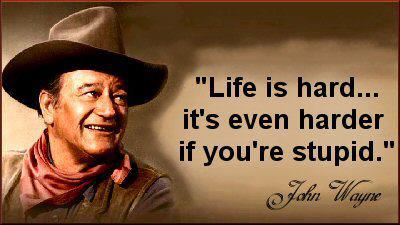
John Wayne speaks the truth.
There are many things at which to point an accusing finger, but I have two main targets: limited vocabulary in textbooks, and the self-esteem movement, which includes feelings of entitlement and special treatment.
I think that requiring our textbooks to adhere to the “Thorndike List” of acceptable vocabulary words was and is one of the reasons our kids are so damn stupid nowadays. The theory that children must be exposed only to those words that are already in their personal vocabularies, is one of the most ridiculous things ever to be proposed, and accepted. Once this theory became accepted practice, the editing and censoring of quality children’s literature began. Beatrix Potter told us that eating lettuce had a ‘soporific’ effect on Peter Rabbit. “Oh NO,” cried the experts,”Little children would have no idea what that word means, so we must change it to a simpler word.”
Lettuce, then, would simply make Peter feel sleepy.
The Little Mermaid DIED. “Oh NO,” cried the experts. “This would frighten little children. We must change the ending.”
Classic children’s literature contains complicated vocabulary. “Oh NO,” cried the experts. “These words are not on the limited vocabulary list and our children do not already know them; therefore, we must simplify all the stories so even the slowest and neediest student can easily understand them.”
This is horrible. And why should education be easy? Learning was never meant to be easy. Learning takes a lot of work.
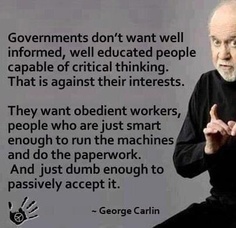
George Carlin knew the truth, too.
What kind of educator, or ANY adult, for that matter, would not understand that the more words a child is exposed to, the more words a child will then know.? A really, really, genuinely, pitiably, inexcusably STUPID adult, that’s who.
Compare the textbooks of fifty years ago, to the textbooks of today. If the comparison doesn’t disgust you completely, look again.
Limiting vocabulary, censoring plotlines, shortening, editing. . . . these things are destroying the public literacy of our nation.
Nursery rhymes are being changed, that they might be considered more politically correct. In England, children are now reading “Bah Bah rainbow sheep. . .” The ending of “Humpty Dumpty” has been changed, so children will not be traumatized. “Snow White” no longer has any mention of dwarves in the title. AAAAAAAAGH.
Doesn’t the expression “the context of the times” mean anything any more? And you all probably already know my opinion of political correctness. Bah.
With every new textbook adoption, your kids’ books are dumber and dumber. Look at all those pictures, for crying out loud. Look at your child’s math book; it’s probably full of social issues and politically correct statistics. Look at his/her history book; it’s full of every culture but ours. (Don’t get me wrong; our country was created by mixing together all kinds of cultures. But if a book is going to feature as many cultures as possible, where is mine?) (And why isn’t the ultimate goal for us all to be Americans? We can do our individual cultural ‘thangs’ at home, but in public, we should all be Americans.) We’re supposed to be a melting pot, not a divided dish wherein nothing touches anything else.
Why are our bright kids forced to sit in classrooms and wait, wait, wait, wait, for something to be said that they don’t already know? Where is the IEP for a smart kid? G/T is considered officially SE in most states; why don’t the parents rally and fight for their kids’ rights as the other SE parents do? Because they don’t know they can, that’s why. And because the typical response of a school to such a request is something along the lines of ‘you should be glad your kid is bright; he’ll/she’ll get by. These other kids won’t.” Bullshit. A large percentage of dropouts are our gifted kids, who just couldn’t stand the lower-than-mediocrity another day.
Why do many of our foreign students out-perform our own kids? Because their parents solidly back the schools, and require hard work from their children. These kids do their work, and do it well, and take pride in it.
Why do American students so often fail? Because their parents solidly back their kids in all aspects of life, and require the schools to bow and cater to them in every way. These kids do their work when they feel like it, and they do it in a slapdash sloppy way, and they really don’t care about it at all, because, dude, they’ve got, like, IMPORTANT shit to do. There’s a big game tomorrow night.
My son’s first grade reading book was a skinny little thing, with one continuing story that went like this: “I will go. Will you go? Will you go with me? Will he go? You will go. He will go. We will go.”
Kept him on the edge of his seat the whole year. Right.
At home, he was reading Elizabeth Enright, but at school, he was sitting in a circle droning “I will go. . . .” for months and months and months.
My mother’s first grade reading book had an excerpt from “Les Miserables” in it. A chapter from “Little House in the Big Woods.” A chapter from ‘Peter Pan.’ She grew up so eager to read these stories in their entirety, she and her classmates fairly beat a path to the public library.
I will go. He will go. Will you go?
Probably not, with no incentive.
My music book in sixth grade was full of great songs set to the melodies of great classical compositions. In the back of the book was the complete synopsis of the opera “Peer Gynt,” with all the major themes in between the paragraphs of synopses.
My daughter’s elementary music book was full of songs like “My umbrella is my friend.” Set to the tune of who-the-hell-cares. In the back? Nothing special.
Could anything be worse than the blandness of a poorly constructed music book? Unfortunately, yes. There is Dr. Jean. Heaven help the poor children who are subjected to THAT. It’s horrible.
I would place Dr. Jean in the same category with the Shurley Method for grammar instruction. Horrible. I can’t even think about them without cringing. The accents alone make my skin crawl.
But that’s just me, and if I’ve offended anyone who really thinks that playing “My mother is a baker, a baker, a baker. . . .” in a truly terrible singing voice complete with dreadful accent and pronunciation, I’m. . . . not sorry at all, actually. Nope, not a bit. It’s terrible stuff, and our kids deserve much better.
The Shurley Method might work for really young children, but if you, as a teacher, have ever been required by your school system to stand in front of a group of 8th graders and tell them to start clapping and chanting about prepositions, well, go figure. It wasn’t a great semester. Older kids don’t respond well to babyish things, and to require them to be subjected to babyish things is, well, REALLY STUPID on some administrator’s part.
In his essay “Papa the Teacher,” Leo Buscaglia wrote: “Papa believed that the greatest sin of which we were capable was to go to bed at night as ignorant as we had been when we awakened that day. This credo was repeated so often that none of us could fail to be affected by it. “There is so much to learn.” he’d remind us. “Though we’re born stupid, only the stupid remain that way.” To ensure that none of his children ever fell into the trap of complacency, he insisted that we learn at least one new thing each day. He felt that there could be no fact too insignificant, that each bit of learning made us more of a person and insured us against boredom and stagnation.”
Buscaglia’s Papa was, indeed, a wise teacher, and an excellent parent who knew how to do it right.
I do not apologize in the least for stating that I believe our schools should be catering to the HIGHEST denominator, not the lowest. If we continue to award kids for merely showing up, and continue to tell a kid he’s the GREATEST because he went for a whole two hours without hitting someone, and continue to give kids limo rides and restaurant lunches for remembering to bring a pencil to class, why should we expect our bright kids, who generally get nothing because continually performing well and behaving properly doesn’t get a kid any notice in a public school, to take education seriously? Nobody else seems to be.
And self esteem, if it is to be worth anything, must be earned. I’ve listened to clusters of low-performing kids who made out like bandits on Honor Day, and they’re not humbly grateful or proud of themselves. They’re in the restroom laughing their asses off at the pretense, at the adults who actually believe these kids got something to be proud of. They’re LAUGHING at the beaming parents and the grinning principals who handed a certificate and a trophy and a special award from Kiwanis for improvement to a kid who should have gotten a big red F and a retention notice. Even the stupid kids aren’t THAT stupid; they know what they really earned. The awards should go to those kids who earned an award, with quality, above-average work and good citizenship.
Don’t think for a split-second that I am advocating leaving out lower-performing students. I am a great advocate of educating every student, but I do think we often underestimate the learning capacity of our lower students, and that we are so afraid of hurting their parent’s self esteem that we all-too-often design a curriculum far below these students’ abilities. Annie Sullivan had to smack Helen Keller and remove her from the influence of her overprotective, over-loving parents before any real learning could take place. Today, Annie would be in the Rubber Room and Helen would have an IEP outlining the simple concepts experts think she might be able to learn. Annie’s methods took Helen to Radcliffe and to the White House; today’s methods might take Helen to a quiet corner of her parents’ home where she would live out her life quietly until such time as she would have to be removed to an institution.
Self-esteem is important, yes. But only if it’s genuine. Otherwise, it’s worse than meaningless; it’s condescending, and there is nothing worse in the world of education than condescension.
That’s why I despise dumbing down. It’s condescension. The kids know it. The bright kids are being destroyed by it. The hard-working foreign kids laugh at it. The slow kids aren’t going to get anything out of it anyway; they deserve their own curriculum.
I taught “The Diary of Anne Frank” in 8th grade for over twenty years. With every textbook adoption, the editing got worse. The last adoption, three years ago, was so bad I refused to use the book; I gave my students an older version that had ALL of the dialogue in it, not just the politically correct parts.
When I phoned the textbook company to complain, I got a young woman who explained to me, as if I were a child, that before ‘Anne Frank’ had been tampered with, permission had been gotten from all the people involved.
“Anne Frank herself gave you permission to cut and edit her play?” I asked the woman.
“Yes, she did.” was the reply.
Can you believe it? Prentice-Hall, you might want to consider hiring a new receptionist.
But see what I mean?
And check out this article (published below). In a perfect world, it should make everyone’s blood boil. Unfortunately, there are many people who are just thankful for such things.
A Dumbed-Down Textbook Is “A Textbook for All Students,” by William J. Bennetta
James A. Michener is well known today as a prolific American novelist and essayist, but sixty years ago he spent some time working as a schoolbook editor. A short recollection of that experience appears in his book This Noble Land, which was issued in 1996 by Random House:
[I was working for] one of the premier New York publishing companies, Macmillan, where I helped produce textbooks in a variety of subjects for use in schools across the nation. While I was at Macmillan, a radical new discipline began to dominate the writing of schoolbooks. A highly regarded educator and psychologist, Edward Lee Thorndike, compiled a list of words and the frequencies with which they occurred in everyday American life: newspapers, popular books, advertisements, etc. From these basic data, he published a list, sharply restricted, which he said ought to determine whether a specific word should be used in writing for children. If, for example, the word take received his approval, use it in schoolbooks. If discredit did not appear on his list, don’t use it, for to do so would make the books too difficult for children.
We editors worked under the tyranny of that list, and we even boasted in the promotional literature for our textbooks that they conformed to the Thorndike List. In my opinion, however, this was the beginning of the continuing process known as “dumbing down the curriculum.” Before Thorndike I had helped publish a series of successful textbooks in which I had used a very wide vocabulary, but when I was restricted by Thorndike, what I had once helped write as a book suitable for students in the sixth grade gradually became a book intended for grades seven through eight. Texts originally for the middle grades began to be certified as being appropriate for high school students, and what used to be a high school text appeared as a college text. The entire educational process was watered down, level by level.
That endeavor has been continued, off and on, in the time since Michener toiled at Macmillan, and it recently has resurged with special virulence. Major schoolbook companies are making their books dumber than ever, because they perceive that there is a big, ready market for such products. The market is provided by schools where “education” consists chiefly of submerging students in feel-good pastimes, furnishing students with easy successes, and ensuring that even the laziest and the worst-prepared students will seem to be doing well.
Publishers usually avoid admitting to their complicity in such skulduggery, but a candid acknowledgment was offered last year by Glenn Gordon, a textbook salesman employed by Harcourt General Inc. (Harcourt General’s textbook-publishing subsidiaries include Holt, Rinehart and Winston.) Speaking about today’s schoolbooks, Gordon said this to a reporter for The Seattle Times:
Absolutely they’ve been dumbed down. I think what we’ve heard a lot of, throughout the country, is that there needed to be an image of American students doing well. In order for us to show them as being smarter, let’s dummy down what we’re teaching them. You’ll appear to be smarter, even though you’re not. [See “Textbooks Too Easy, Too Dull, Experts Say,” by Nancy Montgomery, inThe Seattle Times for 3 March 1996.]
In its heaviest and most pernicious form, the dumbing down of high-school books comprises four interlocking processes. The first is the elimination or dilapidation of concepts that may require a student to expend mental effort: Such concepts are excised entirely, or they are reduced to little heaps of factoids. Next comes the process that Michener saw sixty years ago and that is still going on — the reduction and impoverishment of vocabulary. Then comes the ostensible simplification of style, effected partly through the suppression of compound or complex sentences. This process often requires that logical connections be destroyed for the sake of ensuring that sentences will be simple and short. Finally comes the replacement of written material by pictures — pictures which, as often as not, are mere decorations.
Sometimes a dumbing-down operation is carried out gradually, over several successive versions of the book in question. Sometimes it is carried out abruptly, as in the recent case of Glencoe World Geography. (See the review in TTL for September-October 1996.) Either way, heavy dumbing down has the effect of turning high-school books into products which, if they have any value at all, may be appropriate for middle-school students.
Dumbing down is also obvious in some of the brand-new books that are being produced nowadays — books that haven’t existed in any earlier versions. A notable example here is Biology: A Community Context, a new, dumbed-down product issued by South-Western Educational Publishing (Cincinnati, Ohio). In my judgment, Biology: A Community Context has exceptional merit as a middle-school book and would be a fine choice for use in a middle-school life-science class. South-Western, however, is selling it as a high-school biology book. This strikes me as a sad joke.
South-Western is also promoting a pair of newly created books titled Science Probe I and Science Probe II, which allegedly represent a two-year course in “coordinated science” for high-school students. These books have been so grossly dumbed down that, in most respects, they are indistinguishable from books that the major publishers have been selling, during the past ten years or so, as middle-school texts. The Science Probe books are not even suitable for use in middle schools, however, because the “biology” that they provide has been purged of the principle of organic evolution, the central organizing principle of the biology of the 20th century. South-Western is evidently pandering to the creationists, and these dumbed-down Science Probe books have also been dumbed back — back to the 1500s. No honest teacher would consider using them.
In the past few years, the demand for dumbed-down books has increased because many schools have abandoned the strategy of grouping students according to their abilities. Instead, these schools indiscriminately mix together, in the same courses and the same classrooms, students who vary widely in their talents, intellectual capacities, goals, and states of preparation. As far as I am aware, no one has been able to suggest that this practice serves any educational purpose (by which I mean a purpose that can pass the straight-face test). As far as I know, this fad is based entirely on a political construct which — in the name of social equality — prescribes that all students must be reduced to the level of the least able students, and that the brightest and best-prepared students should be hobbled and handicapped.
Be that as it may, this much is certain: When students who have vastly different capacities are randomly mixed together in the same classroom, the teacher must choose textbooks and other instructional materials that even the slowest and worst-prepared students may be able to use. This is impelling schoolbook-publishers to perform new feats of dumbing down and to produce books that plainly have been designed for dimwits. The books are quite unfit for use by capable students, and capable students are very badly served when they are made to use such books — but never mind that. All that matters is that everybody is using the same book, so everybody is equal to everybody else.
Of course, schoolbook companies can’t promote these books by saying outright that the books are aimed at backward students and dullards, so some companies have taken to using a code-phrase. The phrase is all students, as in “This is a book for all students.” Knowing that all students means the least capable and worst-prepared students can be useful when one is talking with a schoolbook salesman or reading a publisher’s promotional claims.
William J. Bennetta is a professional editor, a fellow of the California Academy of Sciences, the president of The Textbook League, and the editor of The Textbook Letter. He writes frequently about the propagation of quackery, false “science” and false “history” in schoolbooks.
==
I agree with Mr. Bennetta. We’re heading down a really scary path, and we’re going of our own free will, and we’re being guided by people who want us to remain the lowest common denominator. Doesn’t this frighten anyone? I think it should.
Our educational system is a national disgrace.
I was forced to dumb down the curriculum and pass failing students along when I was in the public school systems, and now I am dealing with one of the results of that at the college level. And I still maintain that while it is, of course, ultimately, the lazy spoiled self-esteem-laden students’ fault, they were enabled along the way by their ferocious red-shirting parents, who demanded, and generally got, exceptions for any rule, all along the way.
Shame on us for allowing it to happen. Shame on us for catering to the demanding. Shame on us for permitting our kids to be whiny and empty-headed. Shame on us for putting Nascar on a pedestal and basketball on a throne and letting academics fall by the wayside. Shame on us for sanctioning plagiarism, and hiring lawyers to make sure our kids get the grades we want them to get, whether it’s the grades they’ve earned or not. Shame on us for not making students EARN every single grade they get. EARN. It’s a concept many people don’t even understand. Shame on us for become an entitlement culture. Shame on every parent who ever went to school and demanded mercy instead of justice. Or, rather, ‘favors,’ in the name of mercy. Shame on every kid who fudged an assignment and told his parents he was being picked on and THAT’S why his grades are low. And shame on every parent who believed it.
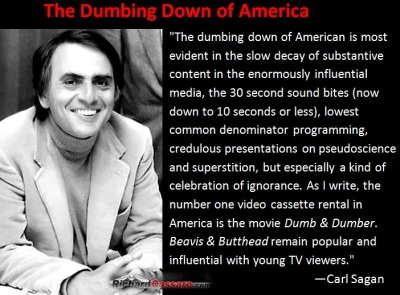
As long as Americans believe they are entitled to good grades and scholarships, and as long as foreigners EARN good grades and scholarships, we’re going to get our asses kicked in academic competition, and we will have EARNED that big bruise and that big “NO” on the admissions form. And once out in the business world, who wants to give their money to a company that can’t even spell the words right on their billboard? Not me, that’s for sure. Misspelling in the business? Count your change very, very carefully. They probably can’t do that, either, unless they’ve hired a foreigner to do it right, for them. I’m sick of it. I’m a loyal American, but I’m not deaf and blind, and we’re going down the tubes, and it all boils down to stupid parents, sissy administrations, ignorant government decisions, feelings of entitlement instead of requirements for hard work, the myth of unearned self-esteem, and excuses instead of expectations.
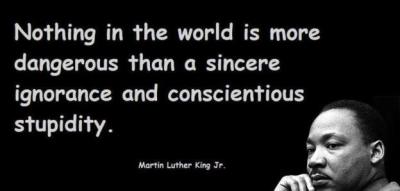
We are to the point now where many people can’t recognize ignorance or stupidity – not the same thing – when they see it. They see only what they want, what they want for their kids, and what the world had better hand them without a lot of effort on their part.
Don’t they deserve it just for existing? Well, don’t they?
I haven’t hit anybody for three days, and I brought a pencil today. Where’s my limo ride and my free pizza? I deserve it.